
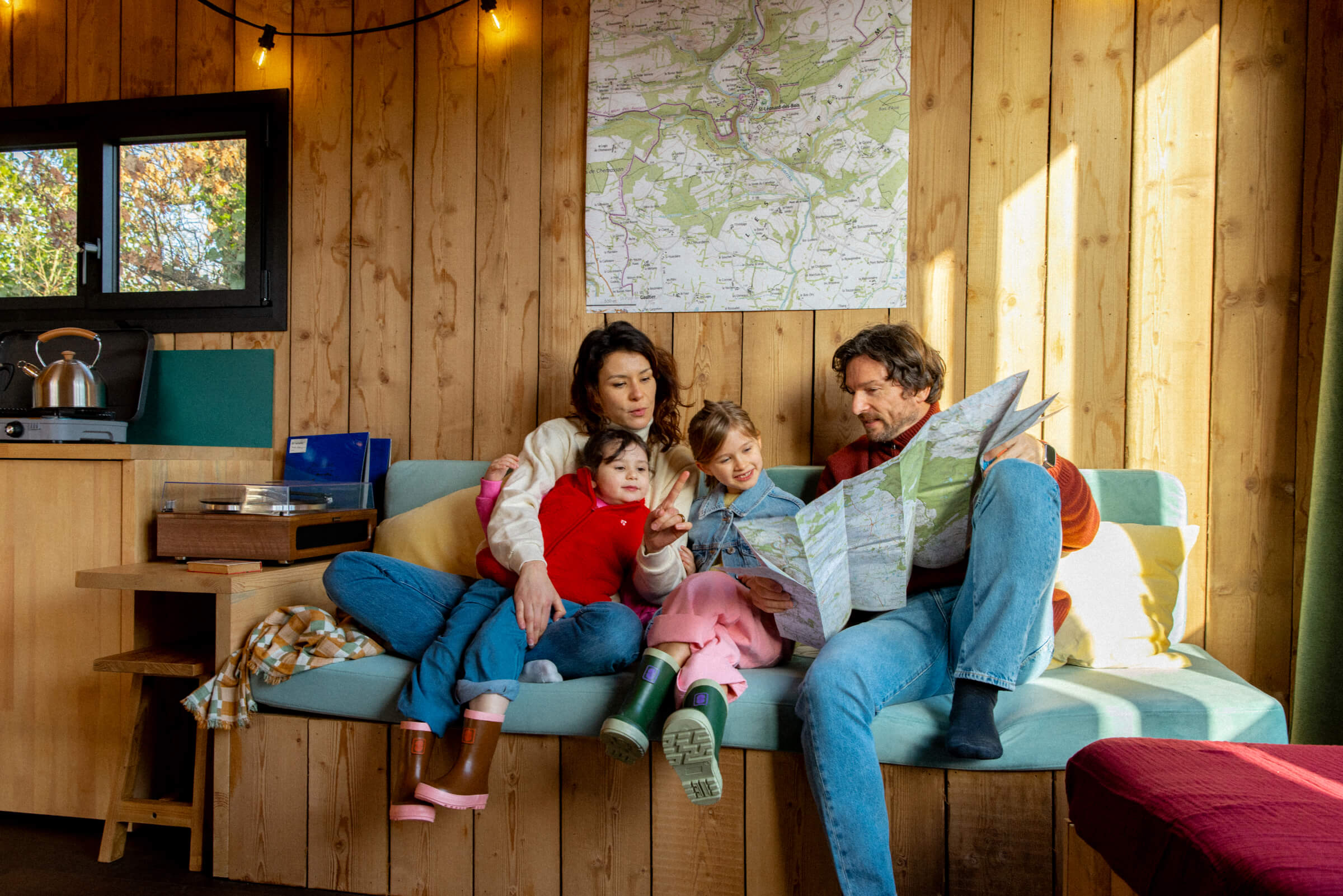

Why going on a micro-adventure (really) changes everything
Micro-adventure is based on a simple premise: there’s no need to go far or far away to live intensely. A day or a weekend close to home is enough. At the Bon Air Club, we’re all for it. We’ll tell you why and how you can set off on an adventure this Friday!
When was the last real vacation memory you had? Not just a weekend you “enjoyed”, we’re talking about a memory that sticks. A day you can still remember the activities you did, the scenery, the smells, the light and the emotions that ran through you.
For many, it’s a bit of a blur. Not because we don’t travel enough, but because we wait too long between two real experiences. We give ourselves two weeks a year, weeks we plan to death to maximize pleasure, and the rest of the time… we survive. Fifty weeks of daily life versus two weeks of intensity. That’s a pretty bad ratio, isn’t it?
Micro-adventure was born of this realization over ten years ago, and has been gaining ground ever since, because it meets an essential need: to feel something strong, regularly, without giving up everything to do it.
Micro-adventure: where does the concept come from?
You’d think so, but the “micro-adventure” didn’t come from a marketing firm. It comes from a guy who had spent four years cycling around the world – 46,000 kilometers through 60 countries – and who, back home in England in 2005, realized something paradoxical: the hundreds of people who came to hear him talk about his adventures weren’t experiencing any of them themselves.
His name: Alastair Humphreys. His observation: the problem is not lack of desire, but the barriers we put in our way. His mantra: adventure begins at the doorstep. So in 2011, he decided to spend an entire year exploring his own country, Great Britain, in small, local and accessible outings he called “micro-adventures”. The following year, National Geographic named him Adventurer of the Year. Not for crossing a desert, but for demonstrating that it’s possible to go on an adventure close to home, and with very little!
What started out as an adventurer-blogger concept has become a global movement in just a few years. As early as 2016, Euromonitor – the world’s leading provider of market, industry and consumer data analysis – identified it as an emerging trend in its annual report on travel practices. In France, the wave broke around 2017, driven by a handful of entrepreneurs and media who understood that millions of urbanites needed to get away from it all. Then Covid gave it a massive boost: in 2020, 86% of French people said they wanted to spend their vacations in France, up from 75% the previous year. Micro-adventure was no longer a niche concept. It had become a response to a certain collective frustration.
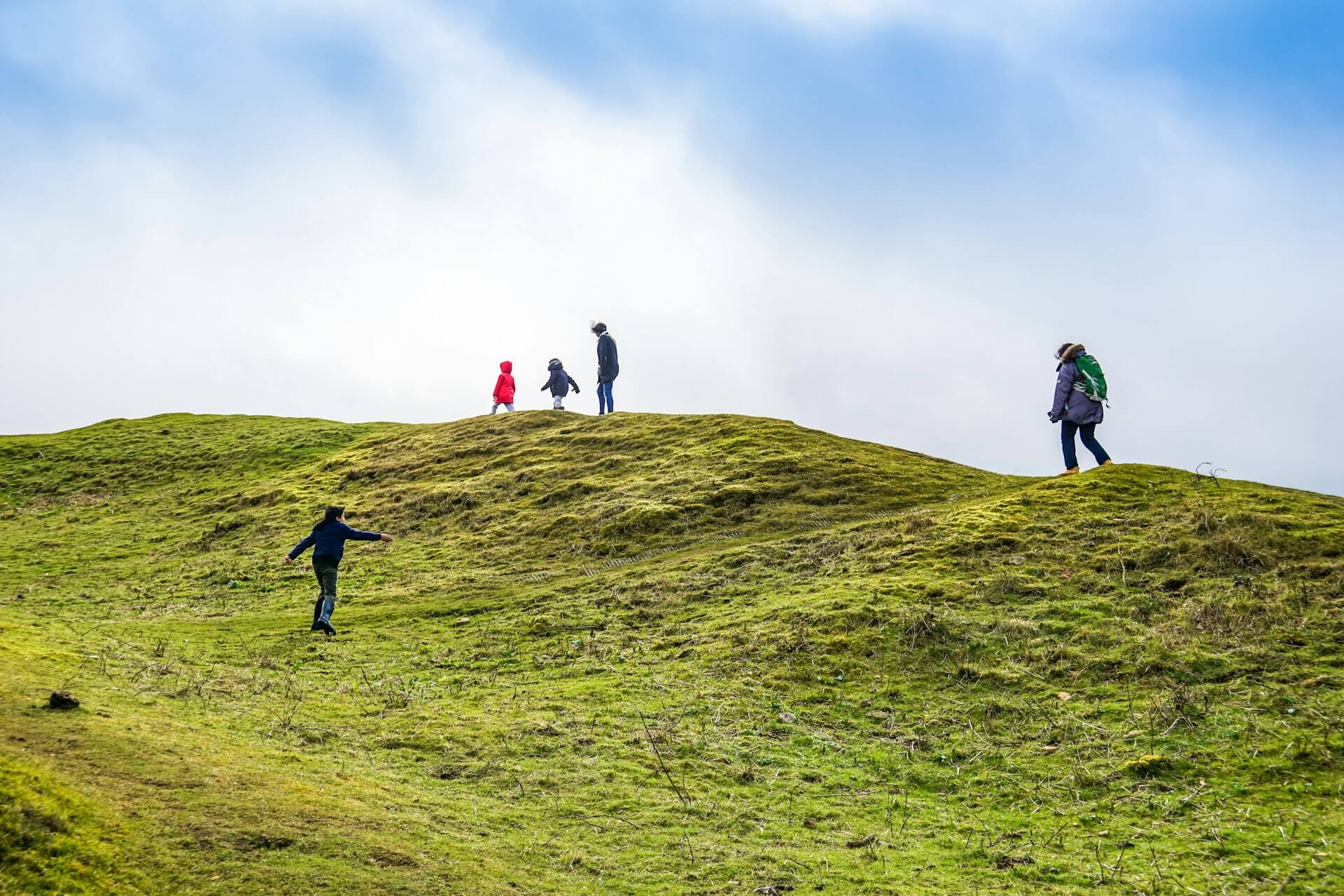
Photo : Unsplash
Why we still don’t dare leave
The concept may be well known, but most people still haven’t tried it. And it’s not for lack of desire. There’s one word that keeps coming back: “one day”. One day, I’ll tour Iceland. One day, I’ll do the GR20. One day, when I have the time, the money and the right equipment. This “someday” is comfortable; it relieves us of the need to act, while giving us the impression of having a project. Except it never happens. Logistics paralysis” has won the day.
It’s also a question of legitimacy. In our minds, adventure has crystallized around an archetype: the great journey, long, distant, testing. We’ve read Jack London or watched documentaries about guys crossing deserts on foot. Inevitably, we don’t feel entitled to call a three-hour hike in the nearby forest an “adventure”! And getting up at 6am to go gravelling or trail riding on a Saturday morning doesn’t really count compared to a three-week trek.
At Bon Air Club, we’re convinced that adventure is easier than you think, and that it doesn’t have to be long and far-flung to be intense. We champion the concept of micro-adventure and explain why!
What micro-adventure really changes
- The feeling of escape doesn’t wait for day 3
On big trips, the first few days are often eaten up by logistics – transport, settling in, orientation. The real disconnect comes when all that settles down, often around the third day. The micro-adventure cuts through this logic. When you’re on a trail at 7 a.m., lungs burning and mist rising gently over the valleys, there’s no time for the brain to dawdle. Escape begins with the very first stride.
This is what Humphreys has documented in his own micro-adventures: one night bivouacked on a hillside 40 minutes from London and the world of work evaporates as surely as after a week under the coconut trees. It’s not the distance that disconnects. It’s the change of environment, the physical effort, the state of mind and the absence of a screen.
- Proximity means freedom
We tend to think of a nearby destination as an easy one. Meaning: not really serious. But it’s not. What proximity offers is the freedom to return. The freedom to miss out without it being a catastrophe. The freedom to test, to explore, to come back. Because two hours from home, you can decide to leave on Friday evening after work and return on Sunday without sacrificing Monday. You can go in winter, spring or autumn and see how the same place changes with the weather and the seasons. A nearby place becomes a playground you know by heart, yet never finish exploring.
What’s more, France isn’t just any playing field. 1,000 kilometers from north to south, 600 from east to west. From the pine forests of the Landes to the granite of Brittany, from the plateaux of the Massif Central to the bocages of Normandy: a unique diversity of landscapes, most of which can be reached in less than two hours from a major city. And when it comes to first-rate outdoor destinations, the Alpes Mancelles, where our first Bon Air Club is located, is no match for the Alps.
- We come back transformed
There’s no minimum to the effect nature has on us. Two hours of cycling on forest paths means two hours without notifications, without urban background noise, without screens. The brain finally finds silence. Studies show that twenty minutes in nature is enough to lower cortisol and slow the heart rate.
And while the brain rested, the body worked. Coming home from a micro-adventure means coming home tired, in the good sense of the word. The kind of tiredness that clears the head, settles the shoulders. Not exhausted from one transit and hotel after another, but truly rested!
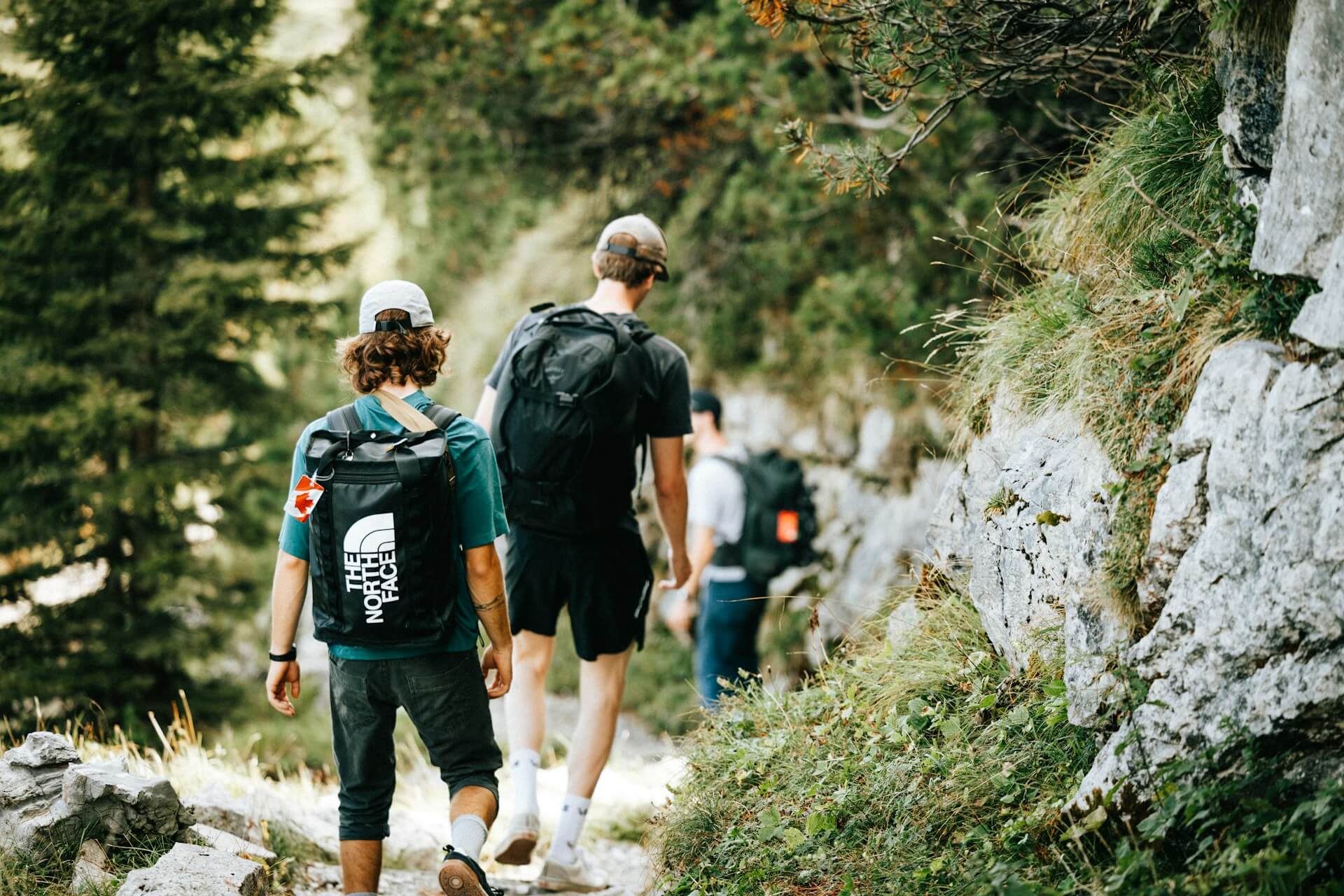
Photo : Unsplash
How to get started without stress
- The right starting point
That’s often where things get stuck. You’d like to get away, but you don’t know where to rent a bike, which trails are suitable, or whether the area is suited to your level… That’s precisely why the Bon Air Club was born, as a base camp for fun and accessible micro-adventures: equipment rental, marked trails, advice on routes according to level and weather, accompanied outings… You arrive, get equipped and off you go, without having spent two weeks planning everything.
- Start with a half-day
You don’t have to sleep outside to make it count. A two- or three-hour gravel outing on a Saturday morning is enough to get the ball rolling. The aim is to get out there, see what it’s like and, often, come home wanting to do it all over again.
- Choose experience, not performance
Micro-adventure is not a competition. You’re not there to beat a record, post an impressive climb or come home exhausted. We’re here to feel something. To see birds above a field of ferns. To stop by a stream and eat a sandwich with your feet in the water.

Photo : Unsplash
Adventure waits for no man
“One day, I’ll do that”. Micro-adventure is exactly the antidote to that: start now, with what you’ve got, from where you are. Not a downgraded version of adventure waiting for something better. It’s another way of living it: more regular, more accessible and, ultimately, more rooted in the reality of our lives.
There are 52 weekends a year. Most pass without a trace. Not because they were bad, but because they all looked the same. Micro-adventures don’t promise the extraordinary. It just promises that you’ll remember the weekend. Are you ready for adventure?